
Engagement Ring Setting Styles Explained: How to Choose the Right One
Solitaire, halo, pavé, bezel, three-stone and more: how each engagement ring setting looks, wears and suits different lifestyles.
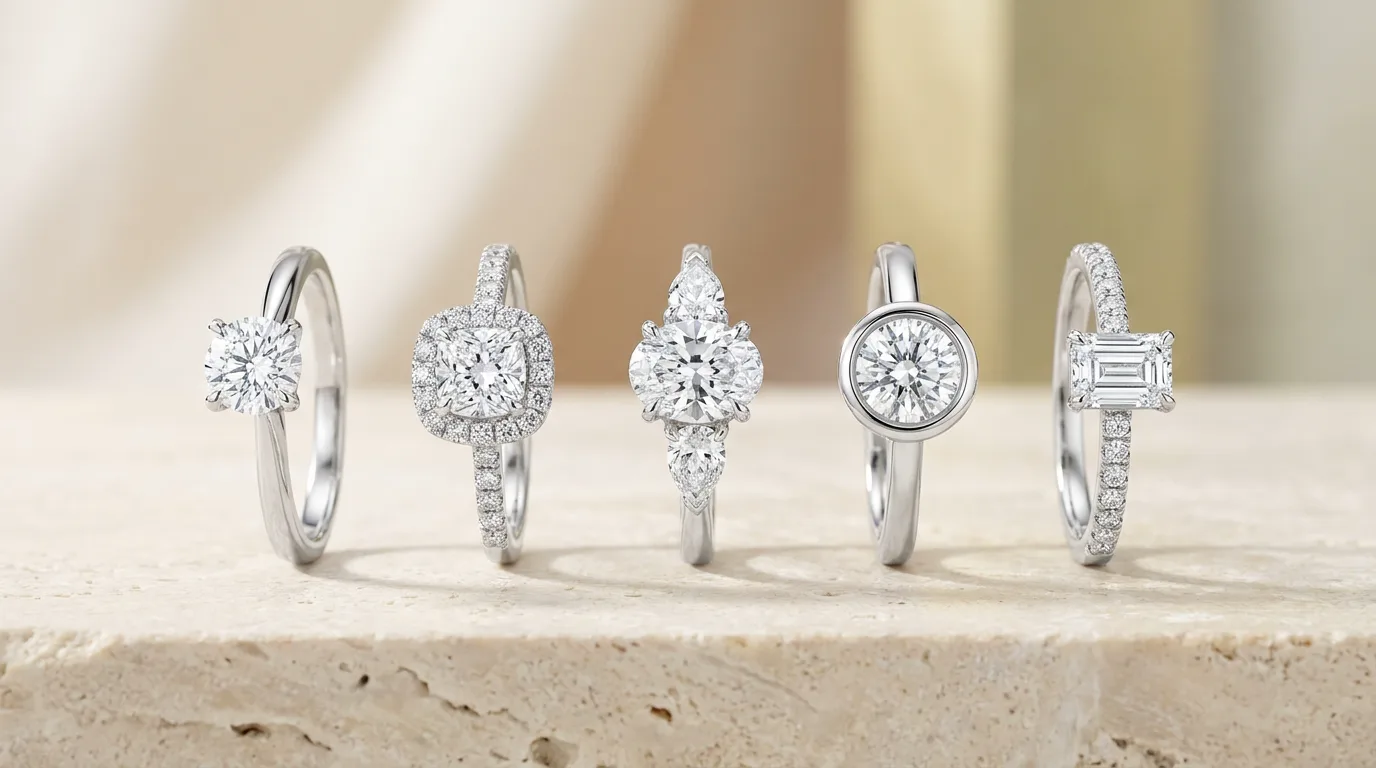
The setting is the metal structure that holds the center stone, and it shapes the look of a ring as much as the stone does. Two rings with identical stones can look completely different, wear differently, and need different care, purely because of how the stone is held.
This guide covers the main engagement ring setting styles, what each one is good at, and how to match one to the person who will wear it.
Quick answer: Choose a solitaire for a timeless look that is easy to maintain, a halo to make the center stone appear larger, pavé for extra sparkle along the band, a bezel for the most protection, and a three-stone setting for presence and symbolism. Lifestyle should weigh as heavily as appearance.
What a Setting Actually Does
A setting has three jobs: hold the stone securely, let light reach it, and define the style of the ring. These goals pull against each other. More metal around a stone protects it and blocks some light. Less metal shows off the stone and leaves it more exposed. Every setting style is a different balance between the two.
Solitaire
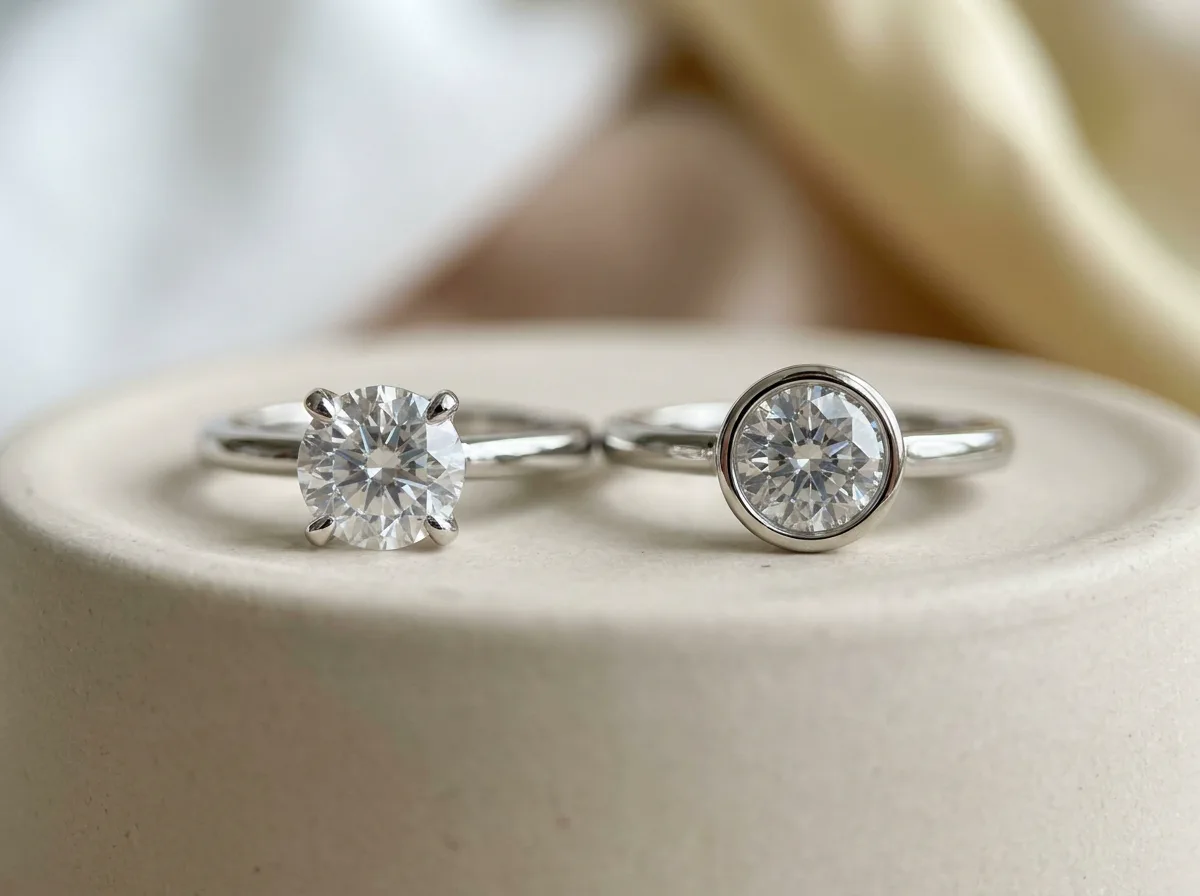
A single stone on a plain band, usually held by four or six prongs.
- Look: Clean and classic. All attention goes to the center stone.
- Strengths: Easy to clean, easy to resize, pairs with almost any wedding band, and never looks dated.
- Trade-offs: The stone carries the whole design, so its quality is more visible.
Four prongs show more of the stone and suit a slightly squarer look. Six prongs add security and make a round stone appear rounder.
Halo
A ring of small stones surrounding the center stone.
- Look: Bright and substantial. The halo makes the center stone appear noticeably larger.
- Strengths: A lot of visual impact for the size of the center stone.
- Trade-offs: More small stones mean more places for dirt to collect and more to check over time.
A hidden halo places the small stones beneath the center stone, visible from the side instead of from above. It adds detail without changing the top view.
Pavé
Small stones set closely along the band, held by tiny beads of metal.
- Look: A band that appears to be paved with sparkle.
- Strengths: Adds brilliance without changing the center stone.
- Trade-offs: Harder to resize, and the small stones need occasional checking, especially on rings worn daily.
Channel
Small stones set into a groove in the band, with a metal wall on each side.
- Look: A smooth, continuous line of stones.
- Strengths: Nothing protrudes, so it rarely catches on clothing. A good choice for active hands.
- Trade-offs: Slightly less sparkle than pavé, since the walls cover the edges of the stones.
Bezel
A rim of metal that wraps fully or partly around the center stone.
- Look: Modern and sleek.
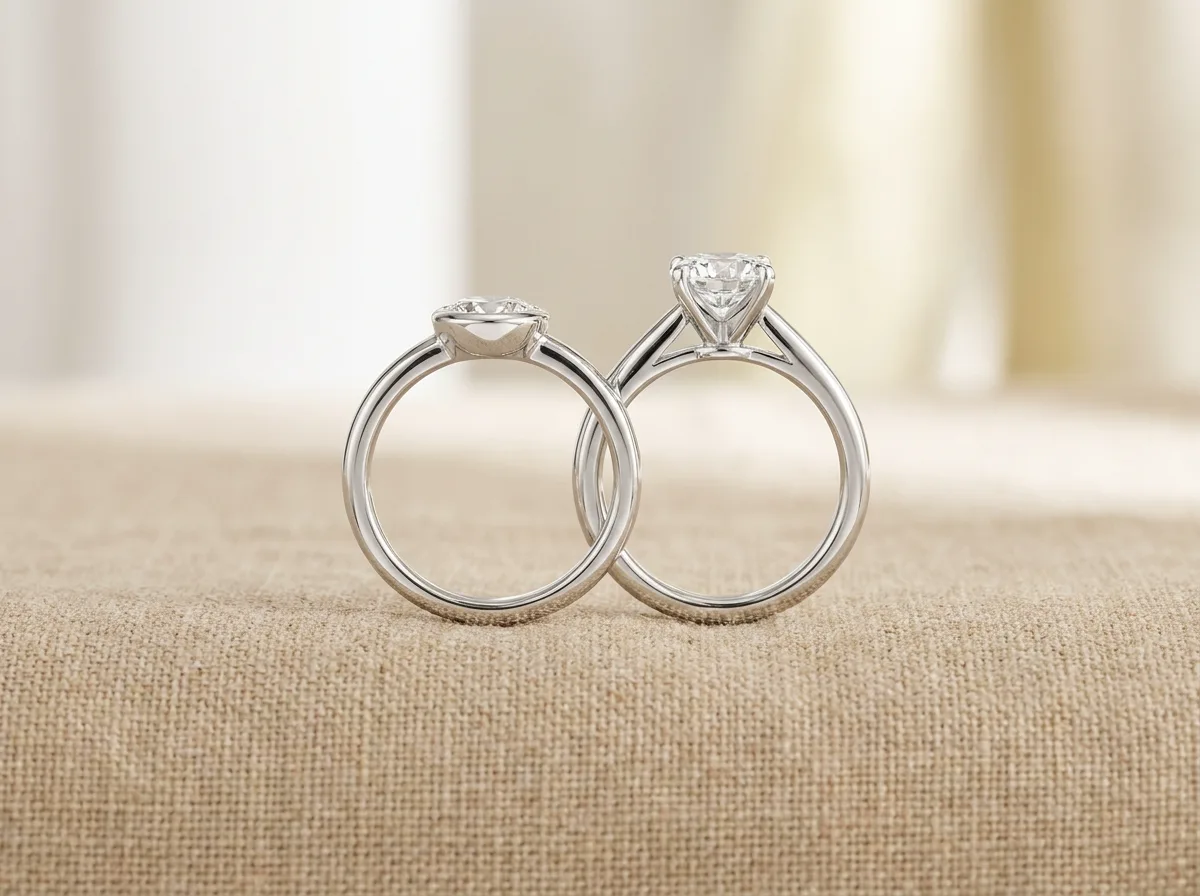
- Strengths: The most protective common setting. The edge of the stone is covered, and there are no prongs to snag.
- Trade-offs: Covers more of the stone, so it can look a little smaller, and less light enters from the sides.
Three-Stone
A center stone flanked by two smaller ones.
- Look: Wide and balanced across the finger.
- Strengths: Strong presence, and often chosen for its meaning: past, present, and future.
- Trade-offs: Three stones to match in color and quality, and a wider top that affects which wedding bands sit flush.
Cathedral
Arches of metal rise from the band to support the center stone.
- Look: Elegant and elevated. It can be combined with a solitaire, pavé, or halo design.
- Strengths: Adds height and a sense of architecture.
- Trade-offs: A higher profile catches more easily on gloves, hair, and pockets.
Tension
The stone appears to float, held by pressure from the two ends of the band.
- Look: Striking and contemporary.
- Strengths: Maximum light exposure and a design that stands out.
- Trade-offs: Difficult to resize, and it must be made precisely for the specific stone.
Comparison at a Glance
| Setting | Makes stone look larger | Protection | Maintenance | Easy to resize |
|---|---|---|---|---|
| Solitaire | No | Moderate | Low | Yes |
| Halo | Yes | Moderate | Higher | Moderate |
| Pavé | Slightly | Moderate | Higher | Harder |
| Channel | No | Good | Moderate | Harder |
| Bezel | No | High | Low | Moderate |
| Three-stone | Yes | Moderate | Moderate | Moderate |
| Cathedral | Slightly | Moderate | Moderate | Moderate |
| Tension | No | Lower | Moderate | Hard |
How to Choose
Start with how the ring will be worn
Someone who works with their hands, wears gloves, or is very active will be happier with a low profile and a protected stone: bezel, channel, or a low-set solitaire. Someone who wears a ring mainly in an office or socially has more freedom.
Look at what they already wear
Clean, minimal jewelry points toward a solitaire or bezel. Detailed or vintage pieces point toward a halo, pavé, or three-stone design.
Match the setting to the stone shape
Round stones suit nearly every setting. Elongated shapes such as oval, pear, and marquise look elegant as solitaires and gain protection for their points from a bezel or V-shaped prongs. Square and rectangular shapes are often paired with halos or three-stone designs. Our guide to how to choose an engagement ring covers the broader decision.
Think about the wedding band
Some settings sit low enough that a straight band cannot rest flush against them. If a matching band matters, check how the two will sit together before deciding.
Consider the metal
The metal affects color, durability, and care. See gold, platinum, or silver for how they compare.
Caring for Different Settings
Every setting benefits from gentle cleaning and an occasional check that stones are secure. Settings with many small stones need it most. Our guide to cleaning and caring for fine jewelry explains a safe routine at home.
Frequently Asked Questions
Which engagement ring setting is the most secure?
A bezel setting is generally the most protective, since metal surrounds the edge of the stone. Channel settings are similarly secure for the small stones in a band.
Which setting makes a stone look biggest?
A halo adds the most apparent size. Thin bands and delicate prongs also make a center stone look larger by contrast.
Is a halo setting harder to maintain?
Somewhat. More small stones mean more crevices to clean and more settings to check, though normal care is usually enough.
Can a setting be changed later?
Often, yes. A stone can usually be reset into a new design, which is one reason many people choose a simple setting first.
If You Enjoy Helping People Choose
If friends already ask what you think before they buy jewelry, that instinct is worth something. CaratShelf lets you open a free branded storefront and share lab-grown diamond jewelry and production-ready ring designs with people who trust your eye.
CaratShelf is free to join and use. Registration is reviewed before a seller account is opened.