
How to Choose an Engagement Ring: A Simple Guide for First-Time Buyers
A practical, no-pressure guide to budget, the 4Cs, ring settings, and sizing for anyone buying an engagement ring for the first time.
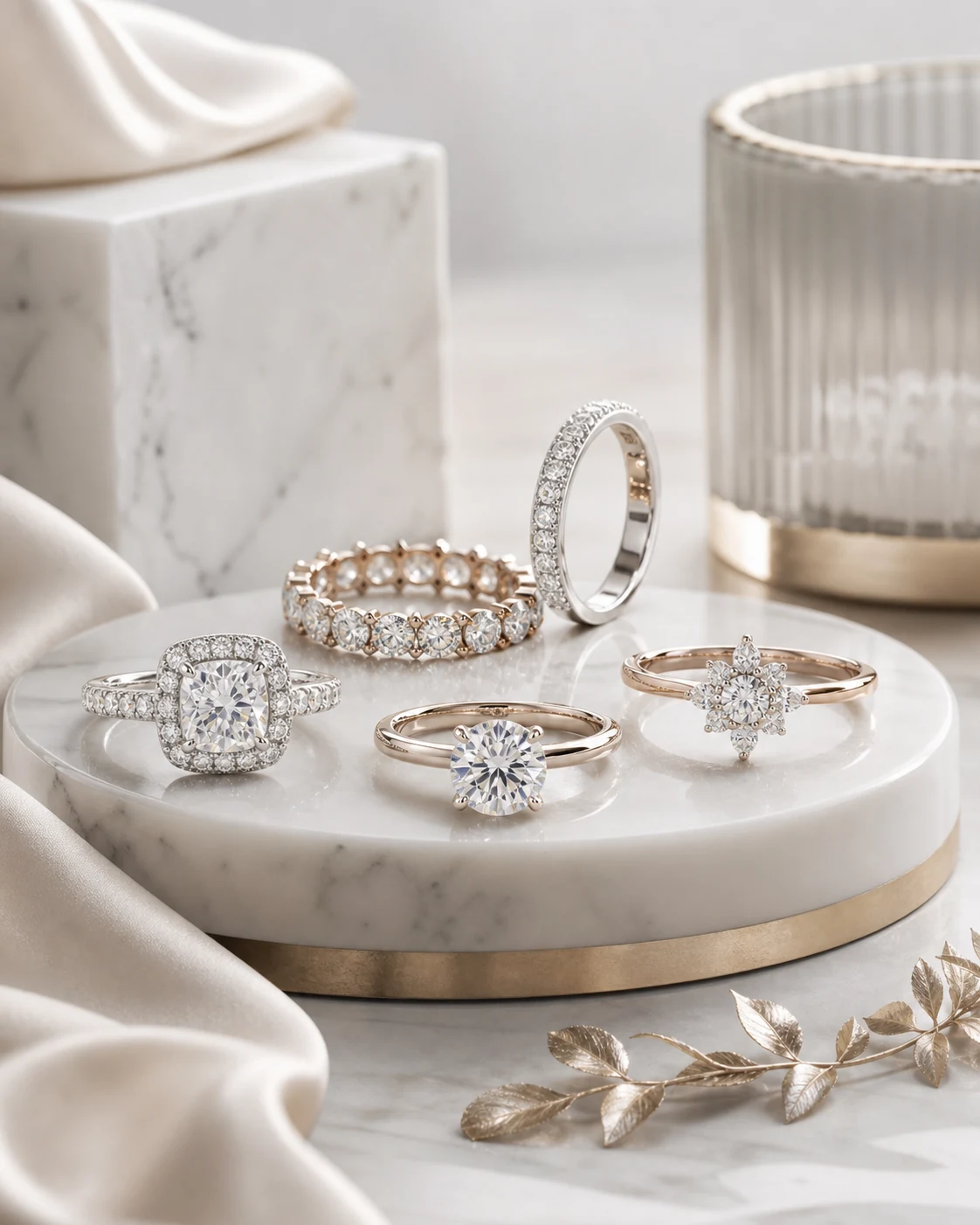
Buying an engagement ring for the first time comes with a strange amount of pressure for a decision most people have never had to make before. There is a lot of received wisdom floating around — some of it useful, some of it outdated marketing — and it is easy to end up more confused after research than before it.
Here is a practical path through the actual decisions, in the order that makes sense to make them.
Quick answer: Set a budget you are actually comfortable with — there is no meaningful rule for how much to spend. Learn the basics of the 4Cs so you can evaluate stones on real terms. Choose a setting based on the wearer's lifestyle and existing jewelry, not just how it photographs. And get the ring size right using an indirect method, since guessing is the most common mistake.
Start With a Budget, Not a Rule
The "two months' salary" guideline that still circulates is not a financial principle — it originated from a diamond industry marketing campaign decades ago, not from any planning logic. Ignore it.
A more useful approach is to decide what you can spend without financial strain, independent of any external benchmark, and work within that number. Since the resale value of jewelry is generally low regardless of what you spend, there is no financial upside to stretching the budget beyond what is comfortable.
If budget is a constraint, cut quality and a well-chosen setting will do more for how the ring actually looks than pushing carat weight. A well-cut, smaller stone in a flattering setting consistently outperforms a larger, poorly cut stone.
Learn Enough of the 4Cs to Make Real Decisions
You do not need to become a gemologist, but a few minutes on carat, cut, color, and clarity changes this from a decision made on trust to one made on information.
The short version: cut controls sparkle more than anything else and is worth prioritizing. Clarity above "eye-clean" — meaning no inclusions visible without magnification — mostly buys a better number on paper, not a better-looking stone. Color differences are subtle to the eye and interact with the metal chosen; warmer color grades look fine in yellow or rose gold. Carat is weight, not size, and stones cut well can look larger than their weight suggests.
Whatever stone you choose, ask for the grading report and verify it against the issuing laboratory's own database before finalizing the purchase.
Lab-Grown or Natural?
Both are genuine diamonds, graded on the same scale. The practical difference is price: lab-grown diamonds typically cost substantially less for comparable size and quality, which lets many buyers get a better stone, a bigger stone, or simply spend less for the same budget. The decision usually comes down to whether the origin of the stone matters personally to you or to the person you are buying for.
Choosing a Setting
The setting matters as much as the stone for how the ring holds up day to day.
Prong settings show off the most light and are the classic choice, but higher prongs sit further from the hand and catch on things more easily. Four prongs show more stone; six prongs offer more security for active hands.
Bezel settings wrap metal around the stone's edge, protecting it well and suiting an active lifestyle, at some cost to how much light reaches the stone from the sides.
Halo settings, a ring of smaller stones around the center stone, make the center stone look larger and add extra sparkle, which is a reasonable way to get a bigger look on a moderate budget.
Metal choice should account for how the wearer lives. Platinum and 14k gold suit daily wear and manual activity better than 18k gold or sterling silver, which are softer.
If the recipient already wears certain jewelry regularly, matching metal tone to their existing pieces is a detail that gets noticed.
Getting the Size Right Without Asking
This is where more proposals go sideways than any stone decision. A few reliable, discreet methods:
- Borrow a ring they already wear on the correct finger — not always the ring finger of the dominant hand, so check which hand they favor for jewelry — and take it to a jeweler for sizing, then return it before it is missed.
- Ask a close friend or family member who might already know or can find out casually.
- Use a printable ring sizer while they are asleep or distracted, though this is the least reliable method.
If you get it wrong, it is not a crisis. Most jewelers resize rings, and simple bands are usually straightforward to adjust. Complex settings with stones set into the band are more limited in how much they can be resized, which is worth asking about before you buy.
Where to Buy
However you choose to buy, a few things are worth confirming regardless of the seller: a grading report from a recognized laboratory for any diamond of meaningful size, a clear return or exchange policy, and — if buying online — a seller you can actually reach with questions.
A Realistic Timeline
Choosing a ring well takes longer than most people expect if you are learning the basics along the way. Give yourself a few weeks rather than a few days if you can, especially if custom sizing or a specific setting needs to be sourced or made.
Frequently Asked Questions
How much should I spend on an engagement ring?
There is no meaningful rule. The "two months' salary" guideline came from a marketing campaign, not financial logic. Decide what you can spend comfortably, and prioritize cut quality and setting over carat weight if budget is limited.
What is the most important thing to get right?
Cut quality, if you are choosing the stone yourself — it controls sparkle more than color or clarity. If you are choosing the ring as a whole, correct sizing matters just as much, since an ill-fitting ring is the most common regret.
Should I choose lab-grown or a natural diamond?
Both are genuine diamonds graded on the same scale. Lab-grown diamonds typically cost significantly less for comparable size and quality. The choice usually comes down to whether the stone's origin matters personally to the buyer.
How do I find someone's ring size without asking?
Borrow a ring they already wear on the correct finger and have it sized by a jeweler, or ask someone close to them who might know. If you get the size wrong, most rings can be resized afterward.
Can a ring be resized if I guess wrong?
Usually, yes, especially simple bands. Settings with stones placed into the band have more limited resizing range, so it is worth asking a jeweler about a specific design before purchase if you are uncertain about size.
If You Already Have an Eye for This
If friends and family already come to you for jewelry opinions, or you found yourself enjoying this more than you expected, you can open a free CaratShelf storefront and share pieces with the people who trust your judgment.
CaratShelf is free to join and use. Registration is reviewed before a seller account is opened.