
Is Lab-Grown Diamond Jewelry a Good Investment?
An honest look at diamonds and resale value, why retail and resale prices differ so much, and how to think about a diamond purchase realistically.
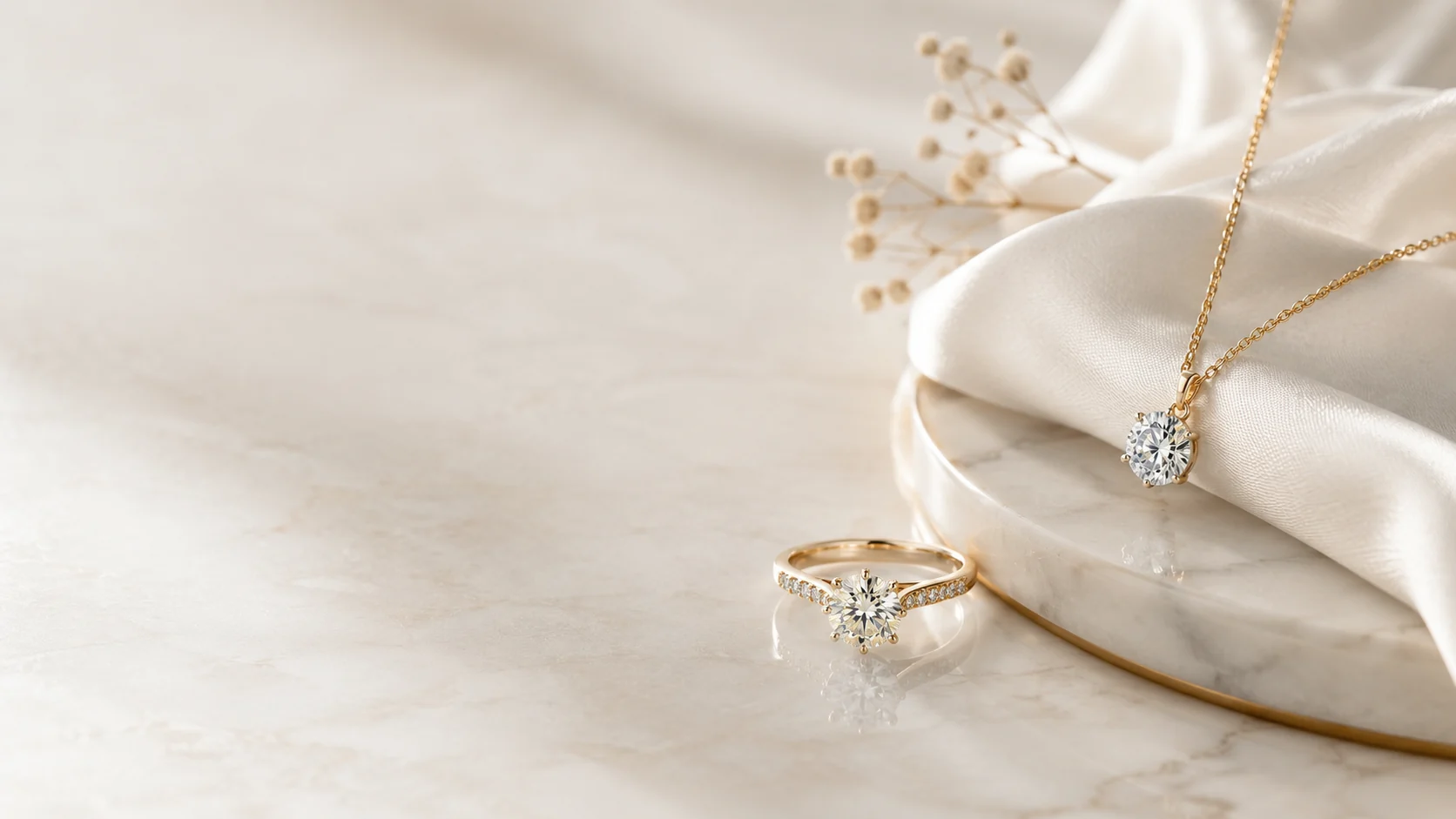
This question deserves a straight answer, and the straight answer is no — not in the financial sense of the word "investment."
That is not a knock on lab-grown diamonds specifically. It applies to diamond jewelry broadly, mined included, and to most jewelry in general. Understanding why is genuinely useful, because it changes how you approach the purchase and usually leads to a better outcome.
Quick answer: Diamond jewelry of any origin generally does not work as a financial investment. Retail prices include design, craftsmanship, and distribution costs that are not recoverable on resale, and the secondhand market pays substantially less than retail. Lab-grown diamond prices have also trended downward as production has scaled. Buy jewelry to wear and enjoy, not to store value.
The Gap Between Retail and Resale
When you buy a piece of diamond jewelry, you are paying for more than the stone. The price includes design work, metal, setting labor, quality inspection, packaging, marketing, and retail margin.
When you sell that piece secondhand, a buyer is generally interested in the stone and the scrap value of the metal. Almost everything else you paid for does not transfer. This is why the resale figure people are quoted so often comes as a shock — it is not that they were cheated at purchase, it is that retail and resale are two different markets valuing two different things.
This gap exists for mined diamonds too. It is a structural feature of the jewelry category, not something specific to laboratory-grown stones.
What Has Happened to Lab-Grown Prices
There is a second factor specific to lab-grown diamonds, and it is worth being clear about.
Lab-grown production capacity has expanded significantly, and unlike mining, it can be scaled in response to demand. As that capacity grew, lab-grown diamond prices generally came down — substantially, and over a relatively short period.
For a buyer, this has been good news: it is why you can get a larger, better-cut stone for a given budget than you could a few years ago. For anyone thinking about resale, it points the other way, since a stone bought today competes against newly produced stones at current prices.
Nobody can reliably predict where prices go from here, and this article is not going to pretend otherwise. What can be said is that the pricing dynamics of a manufactured product are different from those of a mined one, and buying with an expectation of appreciation would be speculating rather than investing.
What About Mined Diamonds?
Mined diamonds have a longer-established secondhand market, and exceptional stones — very large, very high quality, or with notable provenance — do occasionally trade well.
That describes a small fraction of the market. For an ordinary retail diamond of typical size and quality, the retail-to-resale gap applies just as firmly. The idea that a standard mined diamond reliably holds or grows its value is marketing rather than market data.
If your goal is financial, jewelry is an inefficient way to pursue it: it carries high transaction costs, no income, an illiquid resale market, and storage and insurance considerations.
A Better Way to Think About the Purchase
The useful reframing is to treat jewelry as something you buy to use, like a well-made watch, a good coat, or a piece of furniture you will live with for decades. Value comes from wearing it, from what it commemorates, and from how long it lasts.
Under that framing, several decisions get easier:
Prioritize cut quality. It determines how the stone actually looks every day, which is the return you genuinely receive.
Stop paying for grades you cannot see. Clarity above eye-clean and color at the very top of the scale add cost without adding visible quality.
Buy the size you want to wear, not the size you think will resell.
Choose durable construction and metal appropriate to how often you will wear it, since longevity is real value.
Consider lab-grown for the budget advantage. If you are buying to wear, the significant price difference is a straightforward gain — a better stone for the same money.
When Resale Value Does Matter
There are a few situations where it is worth thinking about anyway.
If you are buying something you may genuinely want to part with later — a piece for a phase of life rather than a lifetime — a certified stone from a well-regarded laboratory is easier to sell than an uncertified one, simply because a buyer can verify what it is.
And for anything of meaningful value, insurance matters more than resale. An appraisal for insurance purposes is a separate document from a grading report, and it is what protects you against loss or theft.
Frequently Asked Questions
Do lab-grown diamonds hold their value?
Generally not in a way that makes them a financial investment. Retail prices include costs that do not transfer on resale, and lab-grown prices have trended downward as production capacity has grown. They are best purchased to wear rather than to store value.
Are mined diamonds a better investment than lab-grown?
Mined diamonds have a longer-established secondhand market, but the gap between retail and resale prices applies to them as well. Only exceptional stones trade well, and those represent a small fraction of the market.
Why is the resale price so much lower than what I paid?
Retail prices include design, setting labor, quality inspection, marketing, and retail margin. Secondhand buyers value the stone and the metal, so most of what you paid for does not carry over. This is true across the jewelry category.
Does a grading certificate improve resale value?
It makes a stone easier to sell, because a buyer can verify the stone's characteristics independently rather than taking a seller's word for it. Certification from a well-regarded laboratory is worth having for that reason.
Should I get my jewelry appraised?
For anything of meaningful value, yes — for insurance purposes. An insurance appraisal is a different document from a grading report and serves a different function, which is protecting you against loss or theft.
If You Would Rather Talk About Jewelry Than Speculate on It
Most people who love jewelry love it for how it looks and what it marks, not as a financial instrument. If that is you, and people around you already ask what you would buy, you can open a free CaratShelf storefront and share pieces with the people who trust your taste.
CaratShelf is free to join and use. Registration is reviewed before a seller account is opened.