
Lab-Grown Diamonds vs. Natural Diamonds: What's Really the Difference?
Lab-grown and natural diamonds are the same material with different origins. Here's how they differ in price and grading, and how to decide which suits you.
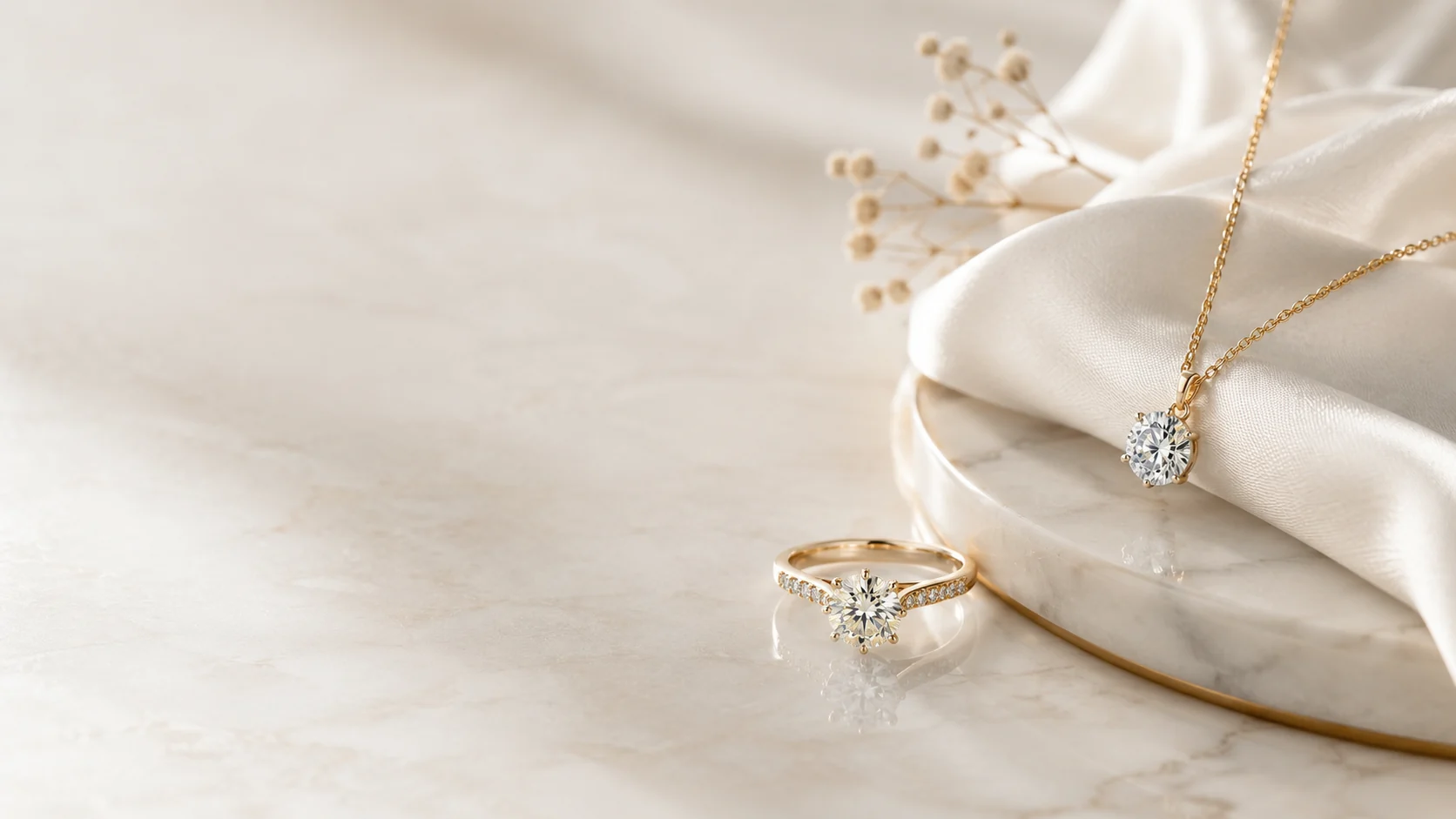
If you have started shopping for diamond jewelry recently, you have almost certainly seen the phrase "lab-grown" next to prices that look surprisingly reasonable. That usually raises the same question: is this a real diamond, or is it something else wearing the name?
The short version is that a lab-grown diamond is a real diamond. The longer version — where they differ, where they don't, and what that means for what you pay — is worth understanding before you spend money on either one.
Quick answer: Lab-grown and natural diamonds are the same material, with the same chemical composition, hardness, and optical properties. The difference is origin: one forms underground over a very long period, the other is grown in a controlled facility in a matter of weeks. They are graded on the same scale, and the most practical everyday difference is price.
They Are the Same Material, Not a Substitute
This is the part that surprises most people. A lab-grown diamond is not a diamond look-alike. It is carbon arranged in the same crystal structure as a mined diamond, which means it has the same hardness, the same refractive index, and the same way of handling light.
That is what separates lab-grown diamonds from simulants like cubic zirconia or moissanite. Those are different materials that resemble a diamond to the eye. A lab-grown diamond does not resemble a diamond — it is one. A jeweler cannot tell the difference by looking at it, and neither can you. Distinguishing the two requires specialized equipment that detects the tiny traces left by how the crystal grew.
The Real Difference Is How They Formed
Natural diamonds formed deep in the earth under heat and pressure, then were carried closer to the surface by volcanic activity. That process happened on a geological timescale.
Lab-grown diamonds are produced using one of two methods that recreate those conditions in a controlled environment:
- HPHT (High Pressure, High Temperature) applies extreme pressure and heat to a small diamond seed, closely imitating the underground environment.
- CVD (Chemical Vapor Deposition) grows a diamond layer by layer inside a chamber filled with carbon-rich gas, at lower pressure.
Both produce genuine diamond crystal. The method mostly matters to the producer, not to the person wearing the finished piece.
Price Is the Difference You Will Actually Notice
For most buyers, this is the deciding factor. A lab-grown diamond typically costs substantially less than a mined diamond of comparable size and quality. The gap is large enough that many buyers use it to move up in size, in clarity, or in cut quality for the same budget — or simply to spend less.
That price difference exists because the supply situation is fundamentally different. Lab-grown production can be scaled in response to demand, while mined supply cannot. It is also worth knowing that lab-grown prices have generally trended downward as production capacity has grown, which is good news if you are buying to wear and worth understanding if you are thinking about resale.
Both Are Graded the Same Way
Lab-grown diamonds are evaluated on the same 4Cs used for mined diamonds — carat, cut, color, and clarity — by the same kinds of independent gemological laboratories. A grading report for a lab-grown diamond will state clearly that the stone is laboratory-grown, alongside its measurements and grades.
This matters practically: it means you can compare two lab-grown stones against each other on the same terms you would use for mined stones, and you are not being asked to trust a seller's own description of quality.
So Which One Should You Choose?
There is no universally correct answer, but there are a few honest guidelines.
A lab-grown diamond makes sense if your priority is getting the most visible stone and best quality for your budget, or if the origin of the material matters to you for environmental or supply-chain reasons.
A natural diamond makes sense if the geological history and rarity of the stone are personally meaningful to you, or if you are buying with an eye toward the traditional secondhand market, where mined stones have a longer-established resale history.
What should not drive the decision is the belief that one is "real" and the other is not. Both are real diamonds. The honest framing is that you are choosing between two genuine options with different origins and different prices.
A Note on Diamonds and Resale Value
It is worth being straightforward about this, because a lot of marketing is not. Diamond jewelry of any origin — lab-grown or mined — generally does not function as a financial investment. Retail prices include design, craftsmanship, and distribution costs that are not recovered on resale, and that is true across the category.
The sensible way to think about a diamond purchase is that you are buying something to wear and enjoy, or to mark an occasion. If it holds value, treat that as a bonus rather than the reason for the purchase. For a fuller look at this, see is lab-grown diamond jewelry a good investment?
Frequently Asked Questions
Are lab-grown diamonds real diamonds?
Yes. A lab-grown diamond has the same chemical composition, crystal structure, hardness, and optical properties as a mined diamond. It is a genuine diamond that formed in a controlled facility rather than underground.
Can a jeweler tell a lab-grown diamond from a natural one?
Not by eye, and not with standard jewelry loupes. Distinguishing them requires specialized laboratory equipment that detects growth characteristics. This is why grading reports state the origin explicitly.
Why are lab-grown diamonds cheaper?
Production can be scaled to meet demand in a way that mining cannot, and the supply chain is shorter. As lab-grown production capacity has increased, prices have generally come down.
Do lab-grown diamonds get certified?
Yes. Independent gemological laboratories grade lab-grown diamonds using the same 4Cs framework used for mined stones, and the report identifies the stone as laboratory-grown.
Will a lab-grown diamond lose its sparkle over time?
No. Sparkle comes from a diamond's hardness, cut, and optical properties, none of which change with age. What dulls a diamond's appearance is surface buildup from skin oils and everyday products, which cleaning removes.
If You Enjoy Talking About This
Plenty of people end up explaining the lab-grown versus natural question to friends and family simply because they took the time to understand it. If that sounds like you, and people around you already ask for your opinion on jewelry, you can open a free CaratShelf storefront and share pieces with the people who already trust your taste.
CaratShelf is free to join and use. Registration is reviewed before a seller account is opened.