
Diamond Shapes Explained: Which One Sparkles Most for Your Budget?
How each diamond shape sparkles, which shapes look largest for their weight, and which usually stretch a budget further.
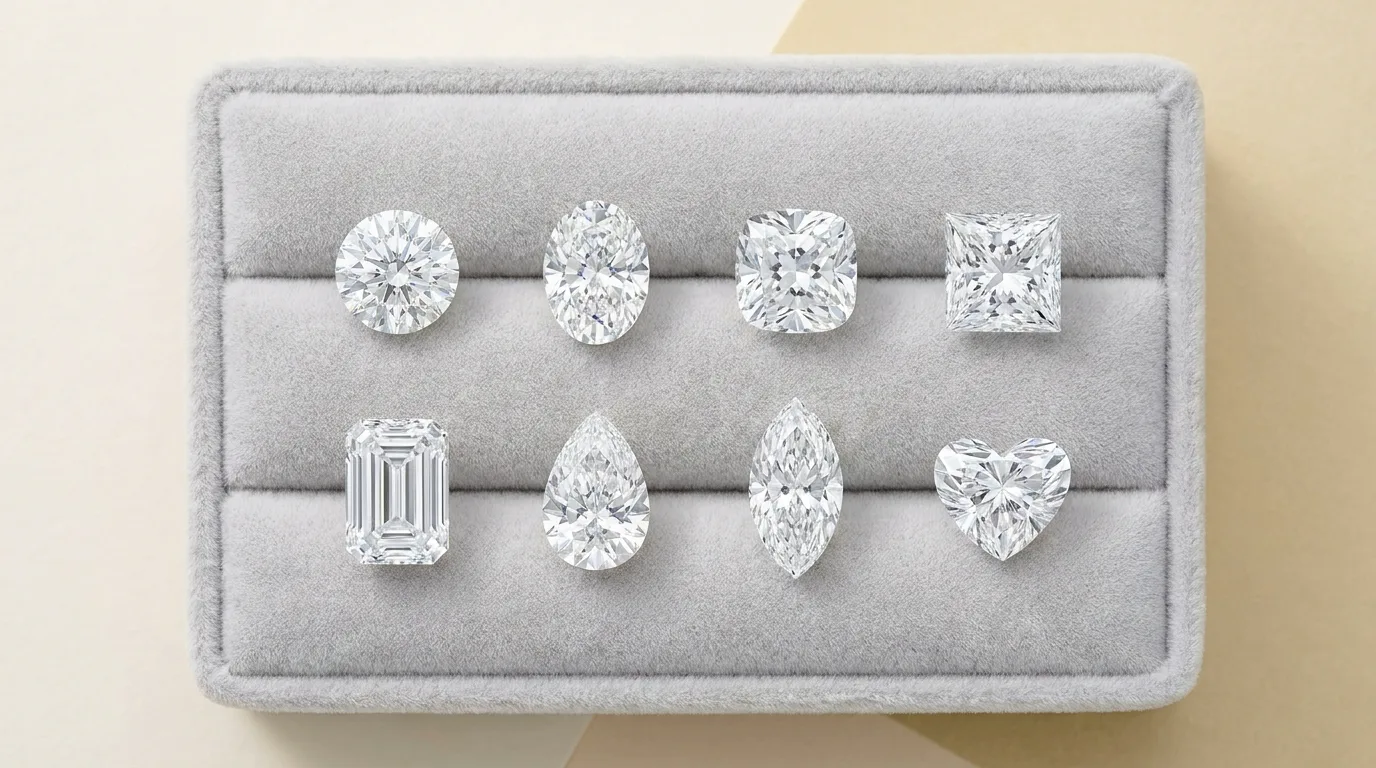
Shape is usually the first thing people notice about a diamond, and it affects much more than outline. It changes how the stone handles light, how large it looks for its weight, how it suits a hand, and how far a budget goes.
This guide explains the most popular diamond shapes and what each one offers.
Quick answer: The round brilliant produces the most sparkle. Oval, pear, and marquise shapes look largest for their carat weight. Emerald and Asscher cuts trade sparkle for a calm, mirror-like elegance. Shapes other than round usually cost less per carat, so they often stretch a budget further.
Shape and Cut Are Not the Same Thing
The two words are often mixed up.
- Shape is the outline seen from above: round, oval, pear, and so on.
- Cut is how well the facets are proportioned and finished, which determines how the stone returns light.
A well-cut stone of any shape will outshine a poorly cut one. For more on this, see what makes a diamond sparkle.
Two Families of Faceting
Most shapes belong to one of two styles.
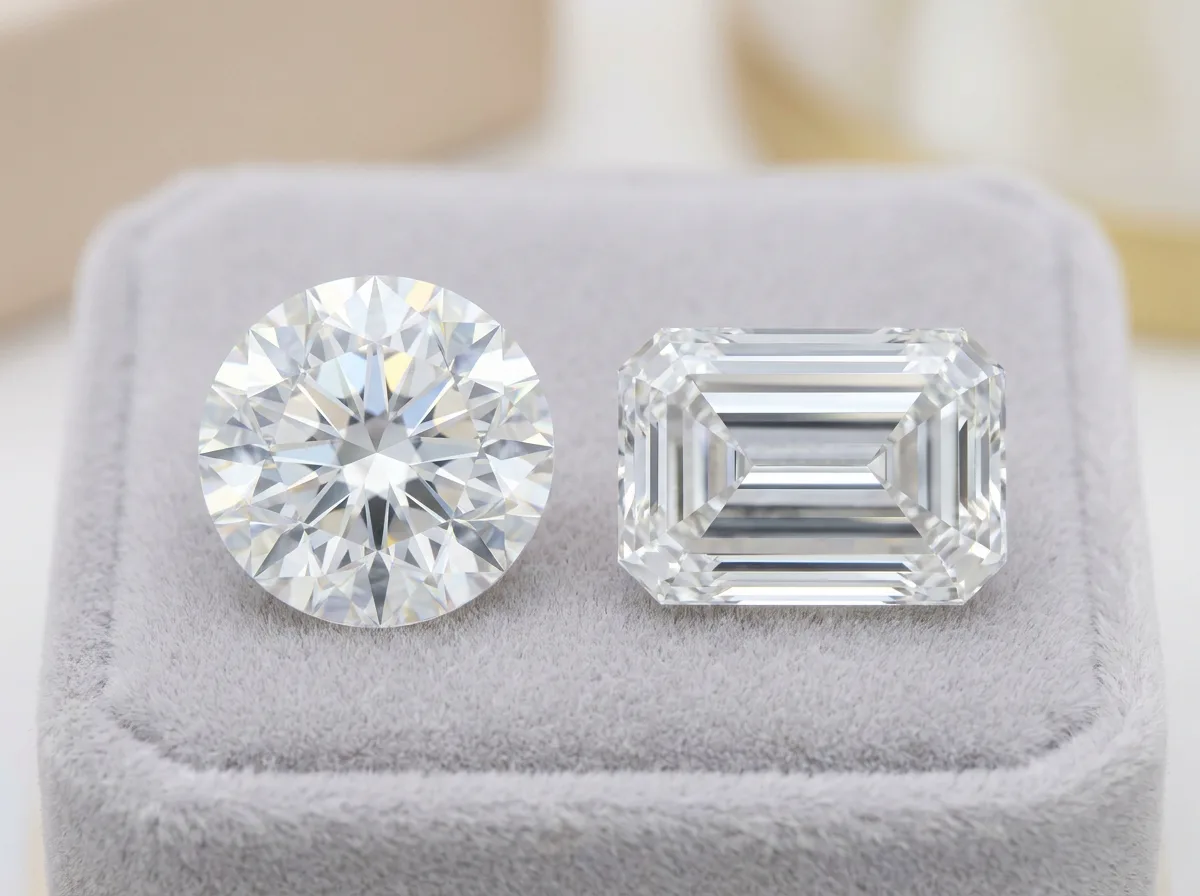
Brilliant cuts have many triangular and kite-shaped facets arranged to bounce light back to the eye. They produce lively, scattered sparkle. Round, oval, pear, marquise, cushion, princess, and radiant shapes are usually cut this way.
Step cuts have long, parallel facets like a staircase. They produce broad flashes of light and a deep, clear look often described as a hall of mirrors. Emerald and Asscher cuts are step cuts.
Neither is better. They are different effects.
The Shapes
Round brilliant
The most popular shape and the benchmark for sparkle. Its proportions have been refined for light return more than any other shape, and it suits every setting. It is also usually the most expensive per carat, partly because more of the rough crystal is lost in cutting.
Oval
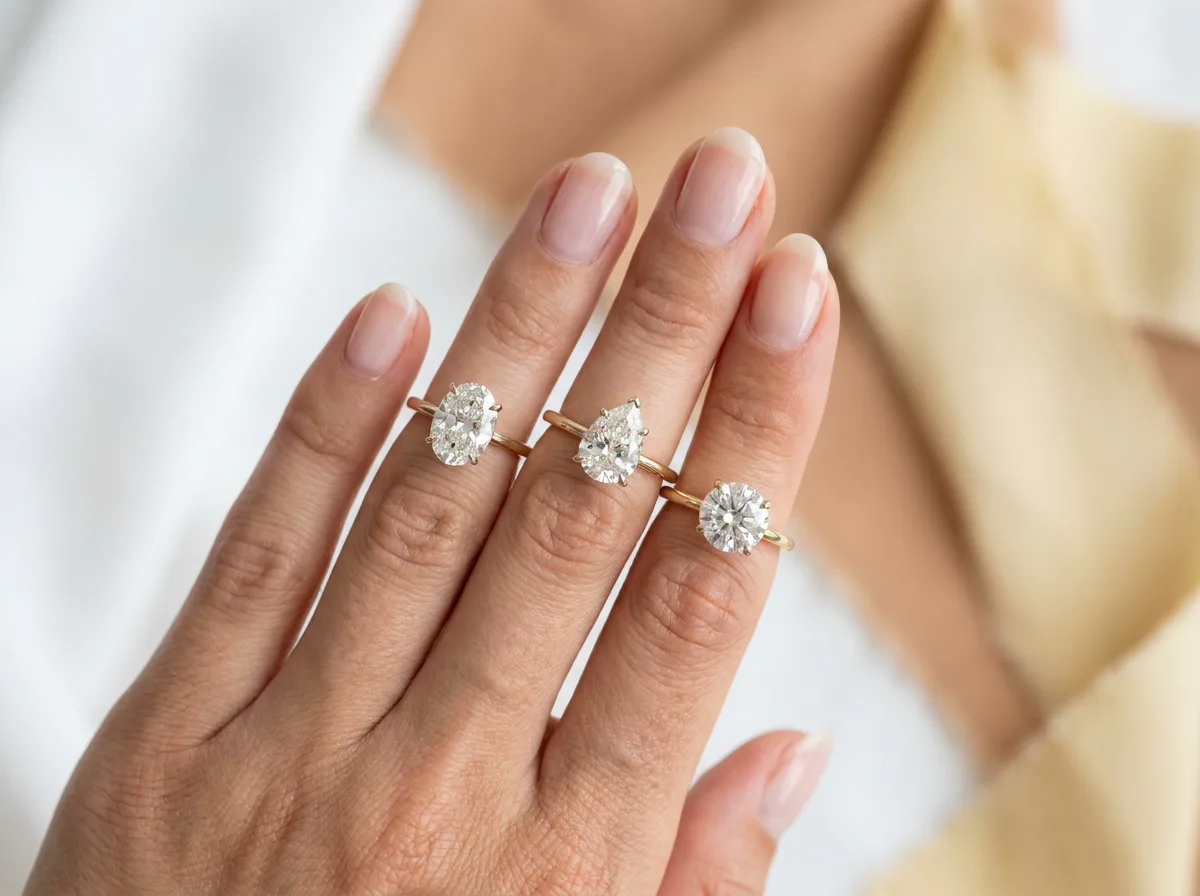
Brilliant sparkle in an elongated outline. An oval covers more of the finger than a round of the same weight, so it looks larger, and it tends to make fingers appear longer.
Cushion
A square or slightly rectangular shape with rounded corners. Soft, romantic, and often associated with vintage styles. Cushions vary considerably, from chunky facets with broad flashes to finer facets with a crushed-ice look.
Princess
A square shape with sharp corners and brilliant faceting. Crisp and modern, with strong sparkle. The pointed corners should be protected by the setting.
Emerald
A rectangular step cut with trimmed corners. Understated and elegant. Because the large open facets act like windows, inclusions and color are easier to see, so clarity matters more than in brilliant cuts.
Asscher
Essentially a square emerald cut, with a distinctive pattern of concentric squares. It has an Art Deco character and the same sensitivity to clarity.
Pear
A teardrop, rounded at one end and pointed at the other. Distinctive and flattering, and it looks large for its weight. The point needs protection.
Marquise
A long shape pointed at both ends. It has one of the largest face-up areas of any shape for a given weight. Both points need protection.
Radiant
A rectangular or square outline with trimmed corners, like an emerald cut, combined with brilliant faceting. It offers the shape of a step cut with much more sparkle.
Heart
A brilliant cut in a heart outline. Symbolic and unmistakable. The shape is easier to read in larger stones.
Comparison at a Glance
| Shape | Sparkle | Looks large for its weight | Hides inclusions | Typical price per carat |
|---|---|---|---|---|
| Round | Highest | Average | Well | Highest |
| Oval | High | Yes | Well | Lower than round |
| Cushion | High | Slightly smaller | Well | Lower than round |
| Princess | High | Slightly smaller | Well | Lower than round |
| Radiant | High | Average | Well | Lower than round |
| Pear | High | Yes | Well | Lower than round |
| Marquise | High | Yes, the most | Well | Lower than round |
| Emerald | Subtle | Average | Poorly | Lower than round |
| Asscher | Subtle | Smaller | Poorly | Lower than round |
Price relationships are general tendencies. Individual stones vary with their grades.
Getting the Most for a Budget
- Consider a shape other than round. For the same budget, a fancy shape often allows a larger or higher-quality stone.
- Choose an elongated shape for apparent size. Oval, pear, and marquise spread their weight across a wider area.
- Prioritize cut quality. Sparkle depends on it more than on any other factor.
- Match clarity to the shape. Brilliant cuts hide small inclusions well, so a slightly lower clarity grade can be a sensible saving. Step cuts need higher clarity.
Our plain-language guide to the 4Cs explains how these grades interact.
Things to Watch For
The bow-tie effect. Elongated brilliant shapes, including oval, pear, and marquise, can show a dark band across the center shaped like a bow tie. A faint one is normal. A strong one is distracting. It is not listed on a grading report, so the stone needs to be seen, in person or in video.
Length-to-width ratio. This describes how elongated a stone is. There is no correct ratio, only preference, and it noticeably changes how a shape looks on the hand.
Vulnerable points. Sharp corners and tips are where a stone is most likely to chip. A setting with prongs or metal covering those points protects them. See engagement ring setting styles explained.
Matching a Shape to the Wearer
- Classic taste: round or cushion.
- Wants the stone to look as large as possible: oval, pear, or marquise.
- Modern and clean: princess, radiant, or emerald.
- Vintage or Art Deco: cushion or Asscher.
- Wants something unusual: pear, marquise, or heart.
Frequently Asked Questions
Which diamond shape sparkles the most?
The round brilliant. Among other shapes, well-cut ovals, radiants, cushions, and princess cuts are close behind.
Which diamond shape looks biggest?
Marquise, pear, and oval shapes show the most surface area for their carat weight.
Which shape is the best value?
Shapes other than round usually cost less per carat. Which one is the best value depends on the individual stone's grades.
Does shape affect durability?
The material is equally hard in every shape. Shapes with points or sharp corners are more exposed to chipping at those spots and benefit from a protective setting.
If You Like Comparing Stones
If you find yourself explaining shapes and settings to friends who are about to buy, you may enjoy doing it more seriously. CaratShelf lets you open a free branded storefront and share lab-grown diamond jewelry and loose lab-grown diamonds with people who value your opinion.
CaratShelf is free to join and use. Registration is reviewed before a seller account is opened.